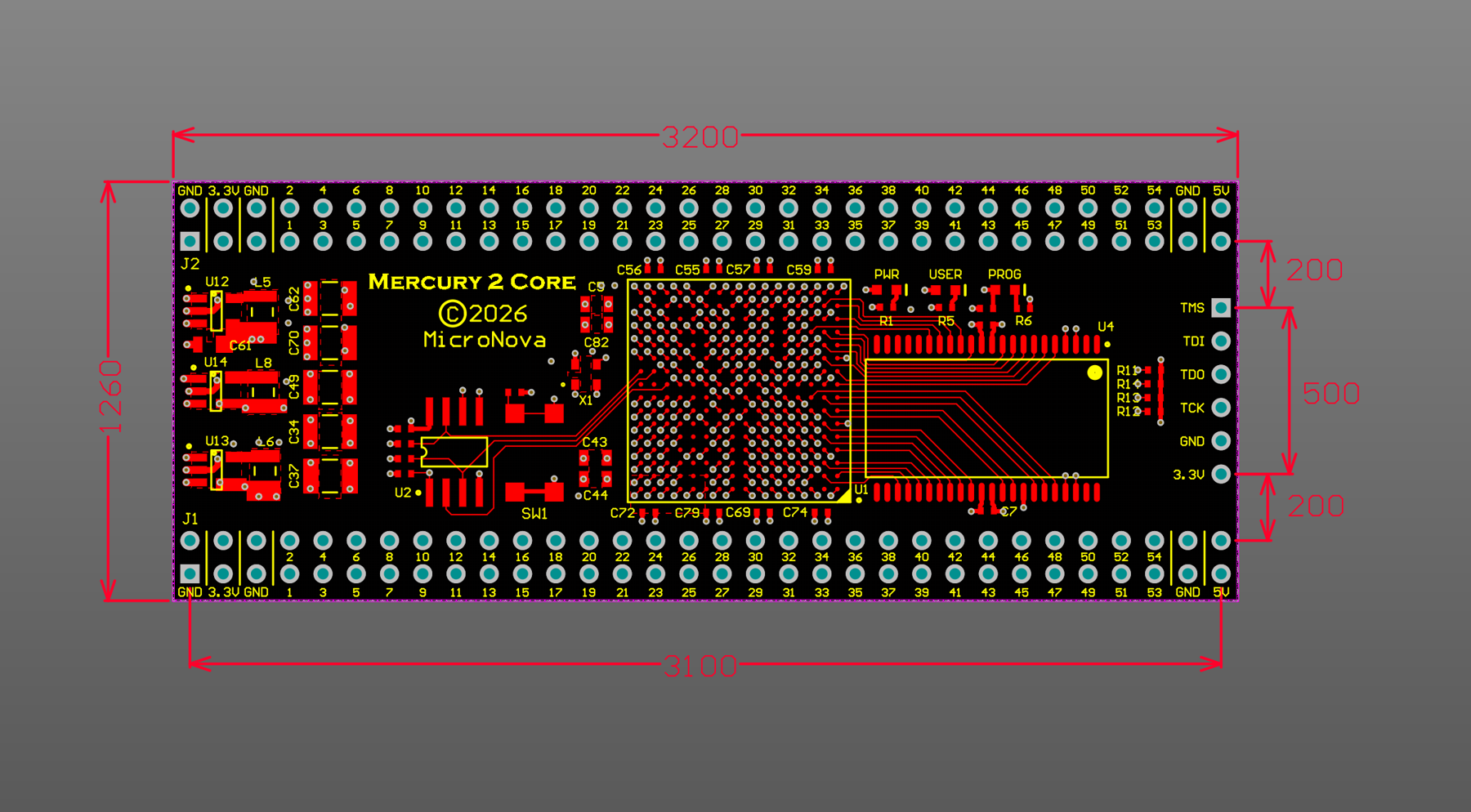
Mercury 2 Core
The essential Mercury, boiled down to what matters most. An Artix-7 FPGA with 108 GPIOs, on-board SRAM and SPI flash, on a small, DIP-compatible board.
The essential Mercury, boiled down to what matters most. An Artix-7 FPGA with 108 GPIOs, on-board SRAM and SPI flash, on a small, DIP-compatible board.
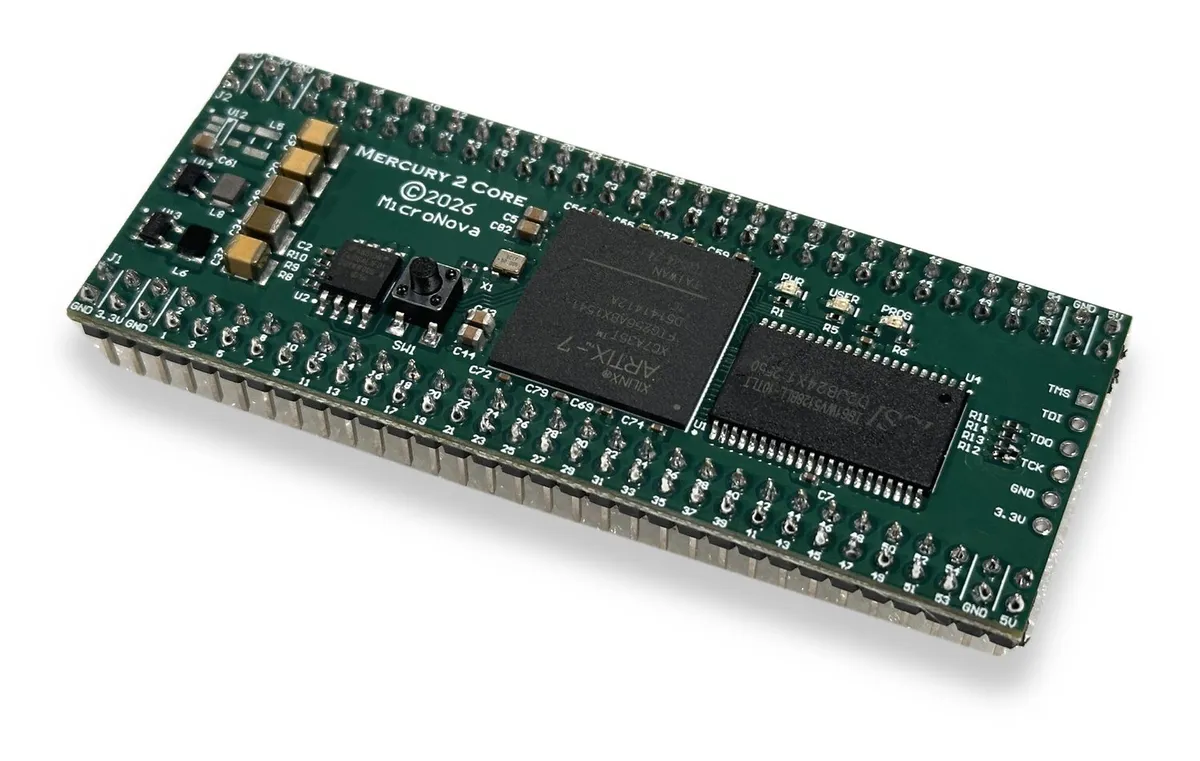
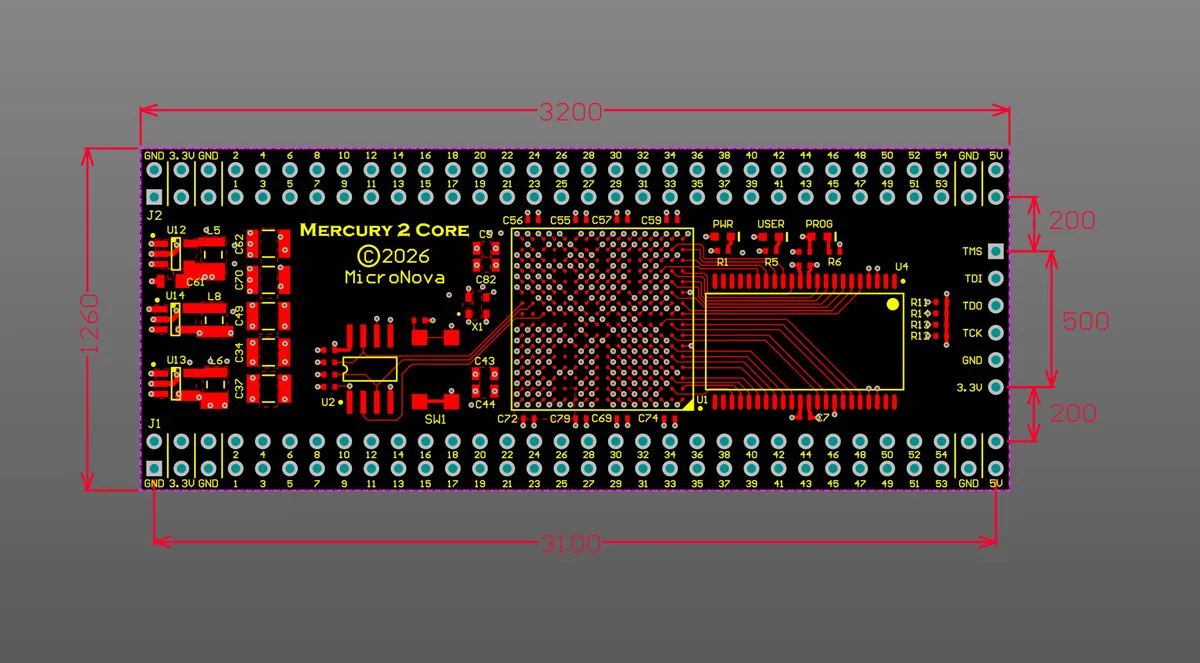
Coming soon
| Part number | Configuration | Price |
|---|---|---|
| MC2A-35T-4M | XC7A35T, 4 Mbit SRAM | $175 |
| MC2A-100T-16M | XC7A100T, 16 Mbit SRAM | $275 |
Mercury 2 Core is the essential Mercury board: a boiled-down version with everything we love about Mercury 2. Tons of I/O, on-board SRAM, and a small, DIP-compatible form factor.
Core doubles the I/O count. Two double rows of 32 pins run along the top and bottom edges, 128 pins in all, with 108 of them available as GPIOs.
Core has no USB interface, so you’ll need a JTAG programmer to load a bit file; JTAG is brought out on a standard 0.1-inch header. The bit file is stored in the on-board 16 Mbit SPI flash, and a push button reloads the FPGA from flash at any time.
An always-on green power LED shows the board is powered and ready to go. A blue user LED is wired to one of the FPGA’s GPIOs, and a red programming LED shows the status of the bit file loading.