
Mercury (original)
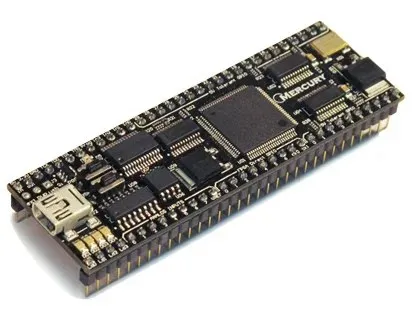
The original Mercury, a Xilinx Spartan-3A FPGA board in a breadboard-friendly 64-pin DIP package.
The original Mercury, a Xilinx Spartan-3A FPGA board in a breadboard-friendly 64-pin DIP package.
Retired
Mercury is retired. It’s been replaced by the pin-compatible Mercury 2, which drops into the same sockets and breadboard layouts. The documentation below stays available for existing owners.
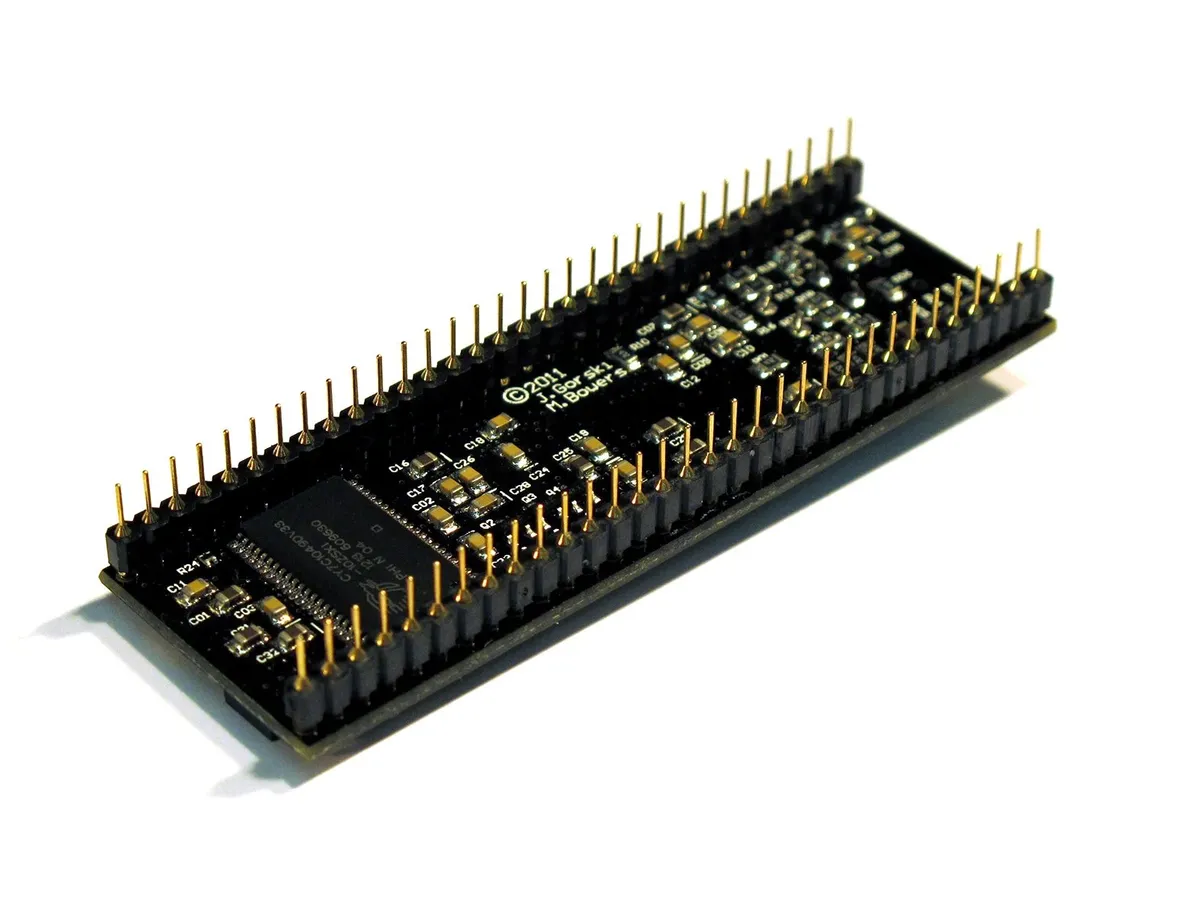
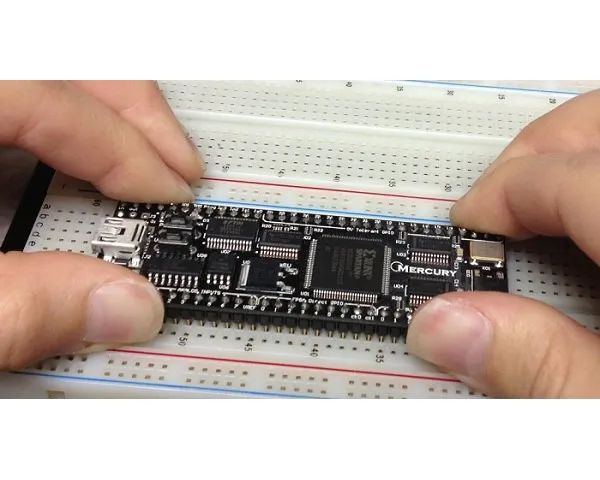
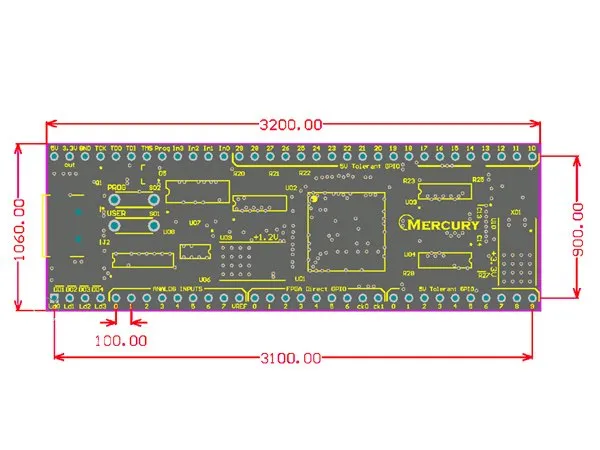
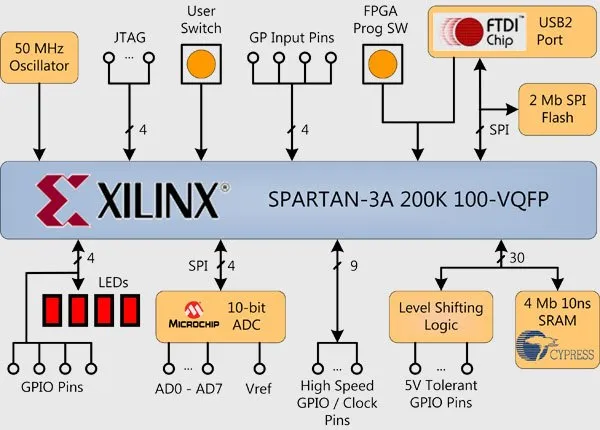
Mercury has 64 round machine-header pins in a familiar dual in-line package (DIP). There are no proprietary expansion connectors: it drops straight into a breadboard. It was made for rapid prototyping, and its tiny form factor makes it easy to embed in a small project. The voltage regulators, bypass capacitors and USB configuration circuitry are all on board, so you can focus on your design.
Most FPGA development boards are limited to 3.3 V digital-only I/O. Mercury added an on-board 8-channel SPI ADC (10-bit, 200 ksps), handy for sensors or audio input, and 30 pins of 5 V-tolerant digital I/O, so it talks safely to TTL-level devices.
Mercury owners built some great projects with it, including a digital oscilloscope, a Bluetooth N64 controller and an Inmos T414B test board.