Mercury 2
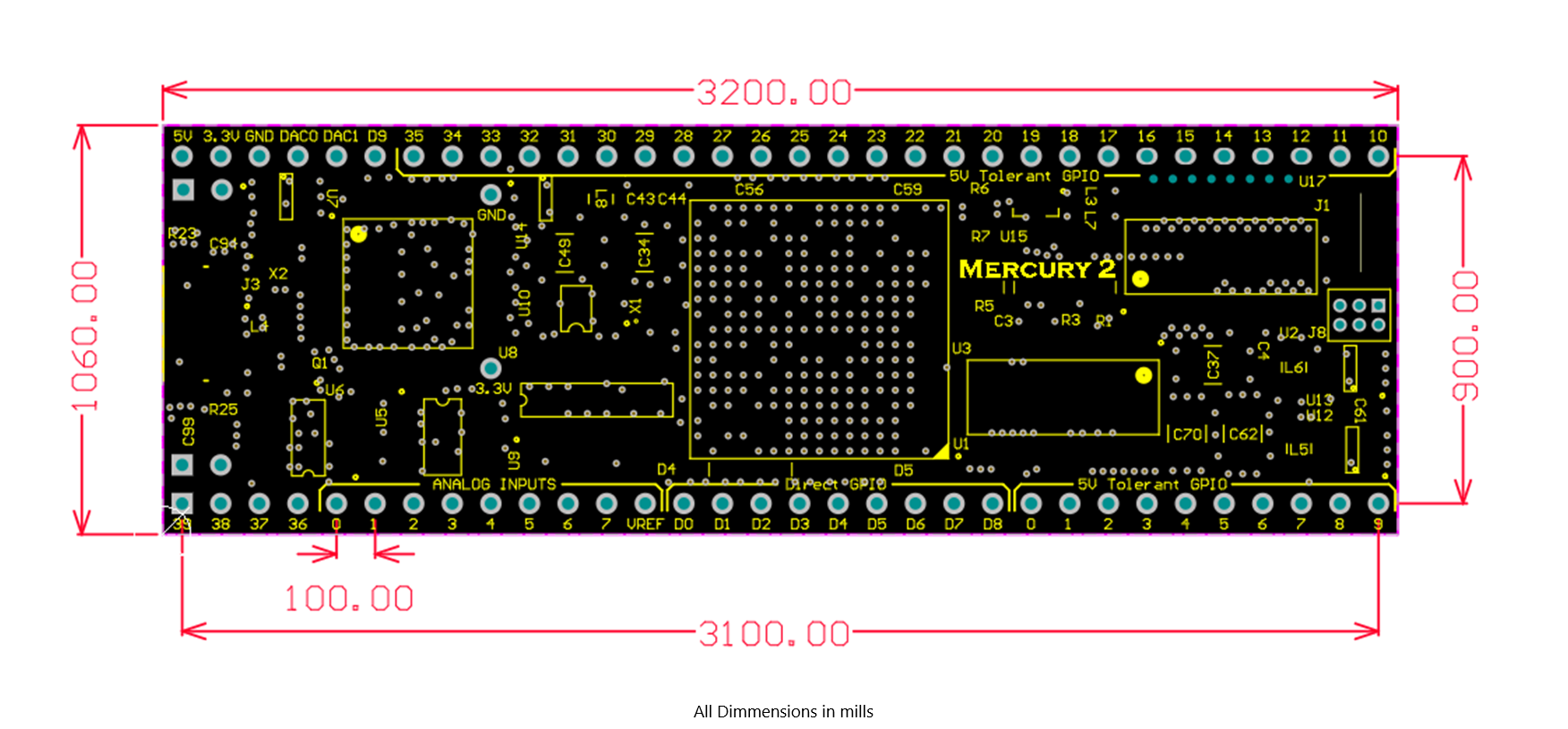
An Artix-7 FPGA development board in a 64-pin DIP package, 3 by 1 inches, that plugs straight into a breadboard.
An Artix-7 FPGA development board in a 64-pin DIP package, 3 by 1 inches, that plugs straight into a breadboard.
In stock
| Part number | Configuration | Price |
|---|---|---|
| ME2A-35T-4M | XC7A35T, 4 Mbit SRAM | $225 |
| ME2A-100T-16M | XC7A100T, 16 Mbit SRAM | $325 |
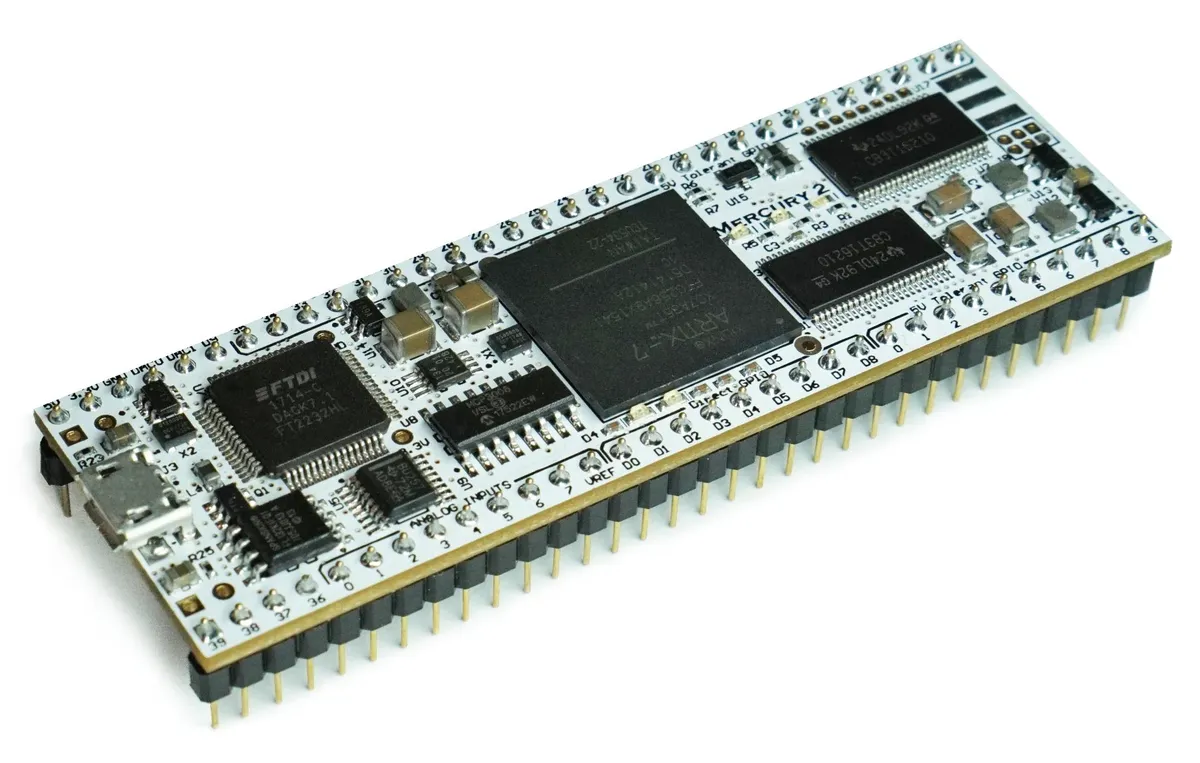
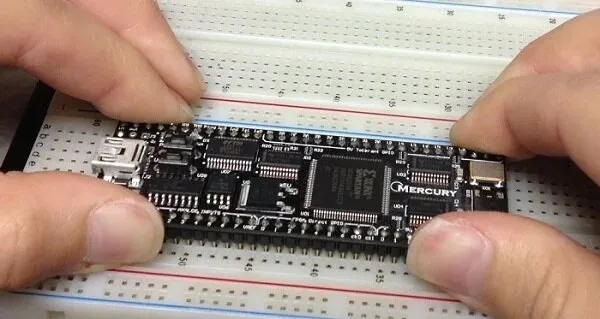
Mercury 2 puts an Artix-7 FPGA, memory, analog I/O and a fast USB link on a board small enough to sit in a breadboard. There are no proprietary expansion connectors: the 64 round machine-header pins drop straight into a solderless breadboard or a 0.6-inch DIP socket.
Mercury 2 is designed by our engineers in Michigan, and every board gets its final assembly and testing from our team in Waterford before it ships. We can also customize builds, for example with part substitutions or industrial temperature range parts. Ask us about a custom build.
Most FPGA development boards are limited to 3.3 V digital I/O. Mercury 2 adds an 8-channel SPI ADC, a 2-channel SPI DAC and the Artix-7’s internal XADC, plus 40 5-volt-tolerant digital I/O pins, so it can talk to TTL-level devices and analog sensors directly.
Write your design to Mercury 2’s flash over USB with the Mercury 2 Programmer, our free Windows app. Download it from Resources. The FPGA loads your design from flash every time it powers up.
The Mercury 2 Ethboard adds an RJ45 jack for the on-board Ethernet PHY.